My visit to Desert National Park in Jaisalmer, Rajasthan, was one of those rare wildlife experiences that stays with me.
We started from Sam Desert in the afternoon and headed about 15 km from our stay for the first field session. On this very first visit, we were incredibly fortunate to spot a critically endangered Great Indian Bustard pair. Seeing a GIB on the first attempt itself felt unreal. The landscape around them was alive with desert specialists. We observed the Asian Desert Warbler, noted for its subtle but unique field characteristics, along with Variable Wheatear. A Laggar Falcon was seen attempting a hunt, adding drama to the open desert skies, and we also had our first glimpse of the Desert Jird, quietly moving through the scrub.
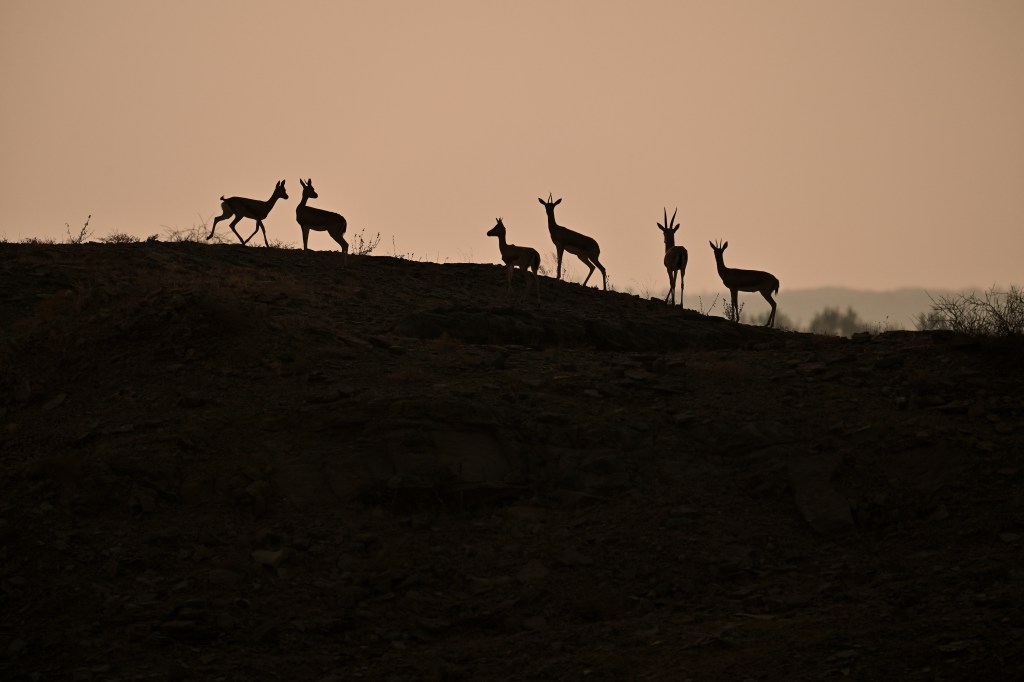
The next day, we returned to the same area early, hoping for another encounter with the Great Indian Bustard. This time, luck truly favoured us. We were able to observe the majestic pair from a much closer distance. Watching their behaviour was fascinating. Their slow, deliberate walking style, the alert posture, and their powerful yet graceful flight pattern reflected why this species is so iconic and irreplaceable. Knowing that only around 140 individuals remain in the wild made the moment feel even more profound.
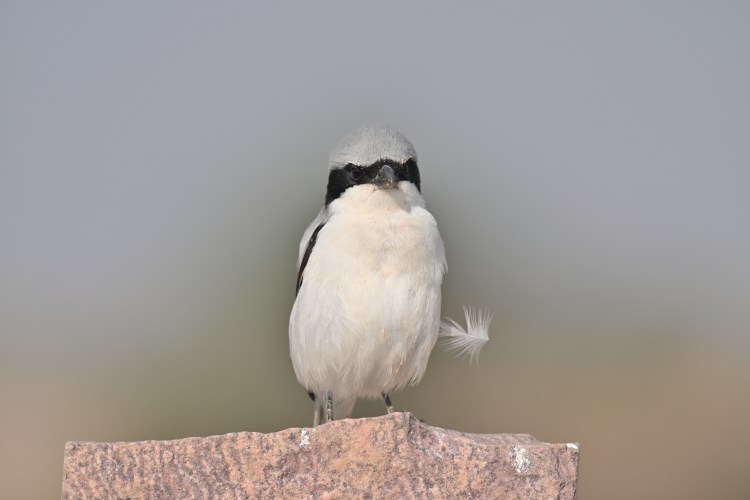
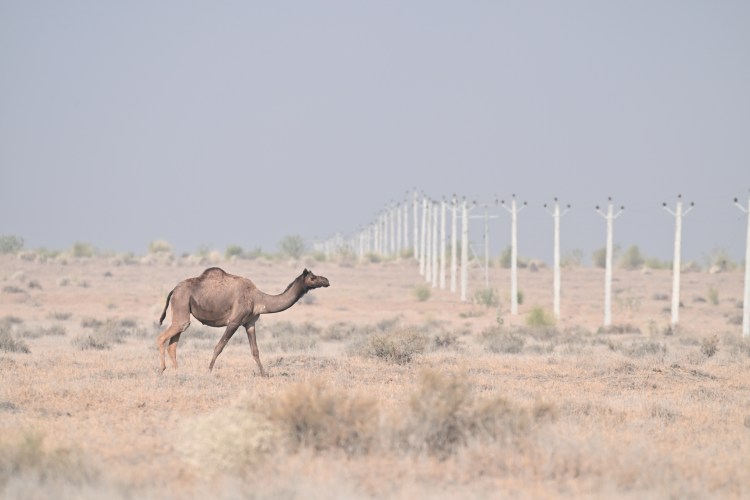
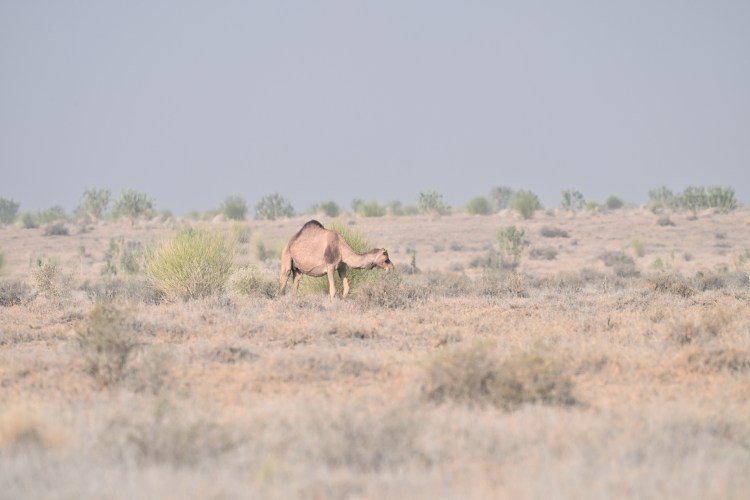
The habitat was equally alive with other wildlife. Herds of Nilgai moved through the area, and wild boar were seen roaming surprisingly close to the bustards. The birdlife was rich, with species like Black-crowned Sparrow-Lark and Bimaculated Lark, along with several others adapted perfectly to this harsh desert ecosystem.
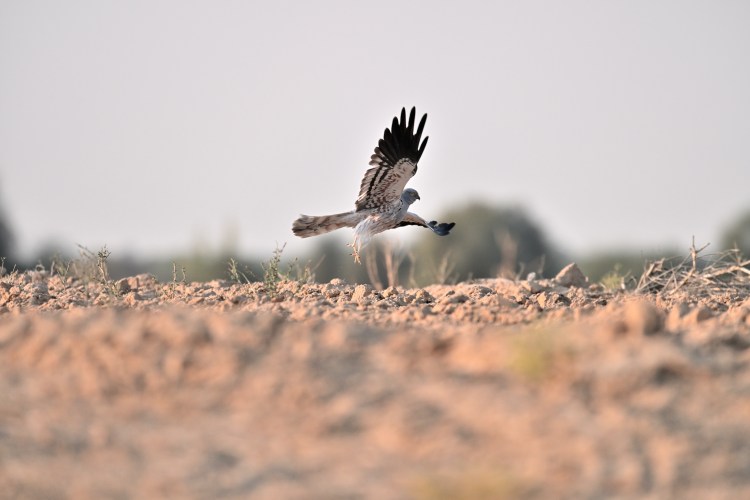
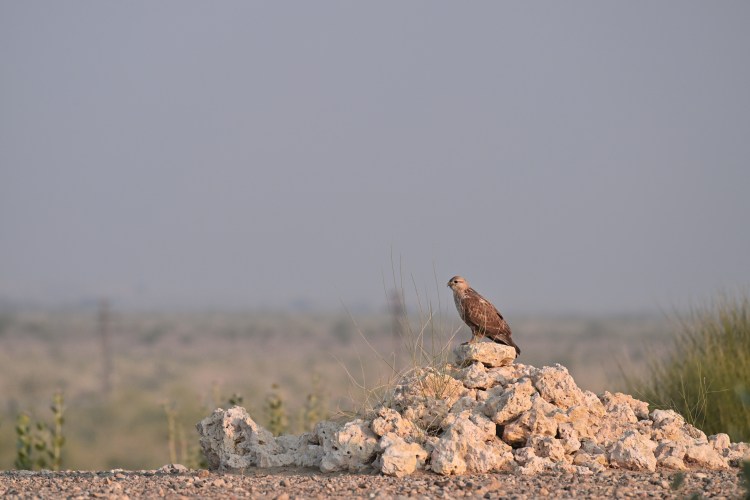
Desert National Park is not just a landscape of sand and scrub. It is a fragile stronghold for some of India’s most threatened wildlife. Seeing the Great Indian Bustard in its natural habitat was a privilege and a powerful reminder of how critical conservation efforts are for this extraordinary species.
On the second day, we explored another part of the Desert National Park area. We witnessed many raptors that day, including the mighty Cinereous Vulture, Egyptian Vulture, and Red-headed Vulture, all seen together at the same place perched on the ground. As the light became very harsh, we concluded our morning session and planned to return in the evening.
After a great morning session, we headed back on safari to another part of Desert National Park in search of the rare and critically endangered White-rumped Vulture, along with the Himalayan Griffon Vulture and Indian Vulture. As we approached the area, we suddenly saw a large flock of vultures lifting off from the ground. At first, we assumed they would return, but later we learned that some people had removed the carcass of a dead animal from the site, likely for its skin. This disturbance caused the entire flock to disperse, and unfortunately, we missed the opportunity to photograph the vultures.
Accepting the situation, we decided to move ahead and search for Trumpeter Finches. As we reached a suitable spot, we observed a small flock perched on the ground near a small water pond, where they had likely gathered to quench their thirst. These tiny birds were extremely shy and did not allow close approach, but with patience we managed to get some satisfying photographs.
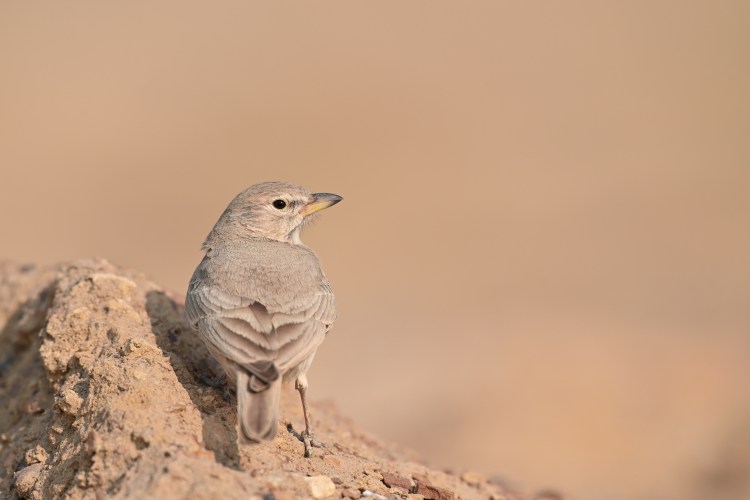
Soon after, we spotted a pair of Desert Larks at the same location. The pair provided an excellent opportunity for close observation and photography. Their confidence seemed to come from their remarkable camouflage, blending perfectly with the desert surroundings and allowing us to approach much closer than expected.
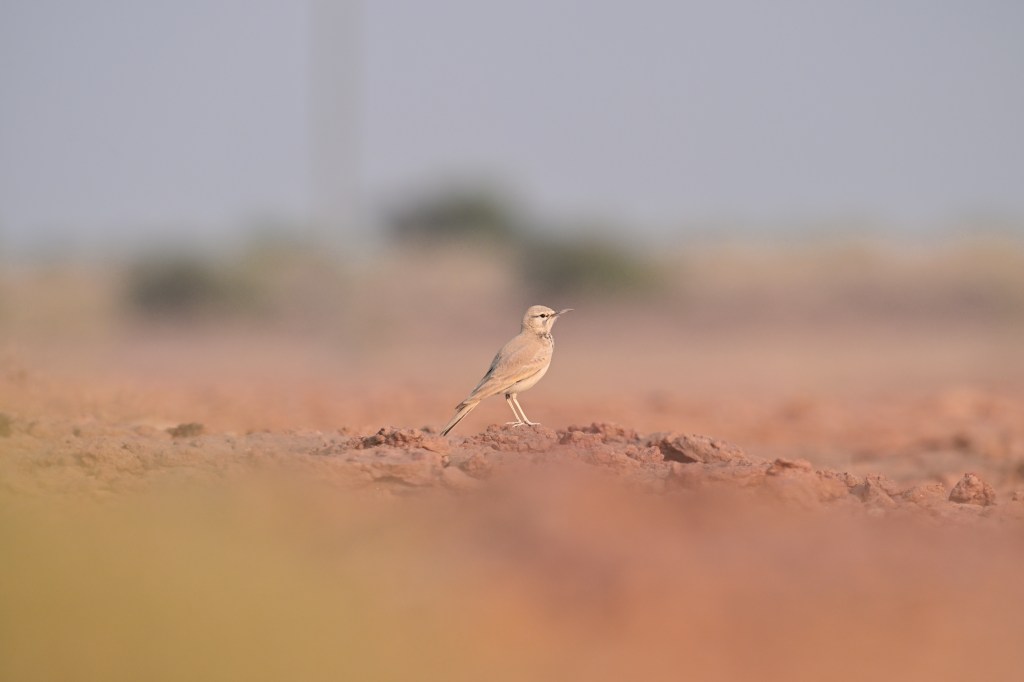
Later, we set out to find the elusive and shy Greater Hoopoe-Lark in a suitable habitat where the species is known to remain in the same area for days. After about four to five minutes of careful observation, our guide located a pair sitting quietly on the ground. It was my first time seeing this bird, and the moment felt truly special. We slowly tried to approach them, but they did not allow us to get very close. However, by lying on the ground and patiently crawling behind them, I was able to capture some decent photographs. The vast open landscape of Desert National Park offers an incredible perspective when you observe birds at ground level, making such close and intimate wildlife encounters even more rewarding.
Later, we visited a small lake nearby where we observed several resident bird species before returning to our stay. The nights and early mornings at Desert National Park were quite chilly, making the overall experience even more refreshing and memorable. With another fulfilling day behind us, we prepared ourselves for our final day in this remarkable desert landscape.
Under process……
 Animateness