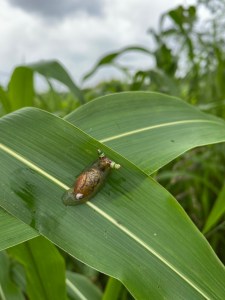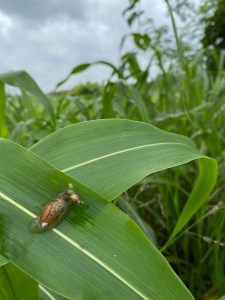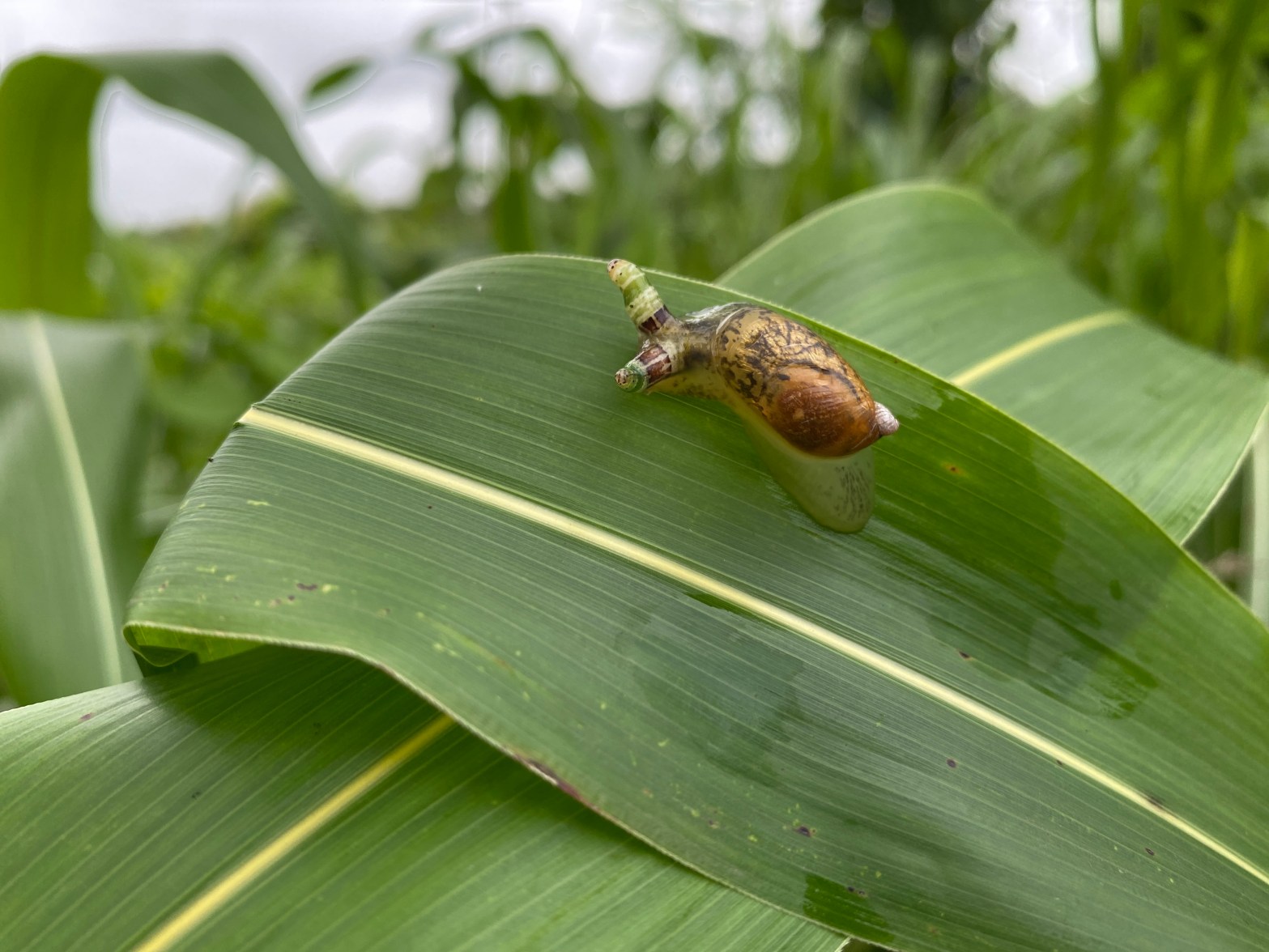
A parasitic flatworm called Leucochloridium has one of the strangest life cycles in nature. It needs multiple hosts to survive and reproduce. Its larvae infect a snail and move into the snail’s eyestalks, where they swell and pulse in bright, banded patterns that closely resemble caterpillars. This is not accidental. The parasite is effectively turning the snail into bait, making it far more visible to birds that would normally eat caterpillars.
To increase the chances of being eaten, the parasite also alters the snail’s behavior. Snails usually avoid light and stay hidden during the day, but infected ones are driven into exposed, well-lit areas. When a bird pecks at the eyestalk, it consumes the parasite. Inside the bird, the parasite matures and reproduces, releasing eggs through the bird’s droppings.
Those droppings are then eaten by other snails, and the cycle starts again. Inside the new snail, the parasite spreads through the body and eventually occupies the eyestalks once more. Interestingly, when a bird bites off the eyestalk, the snail often survives because it can regenerate it over time. This allows the parasite to keep using the same host repeatedly.
Here’s the video you referenced, with a proper link:
https://www.instagram.com/reel/CgZaIqfgjzF/?igshid=YmMyMTA2M2Y=